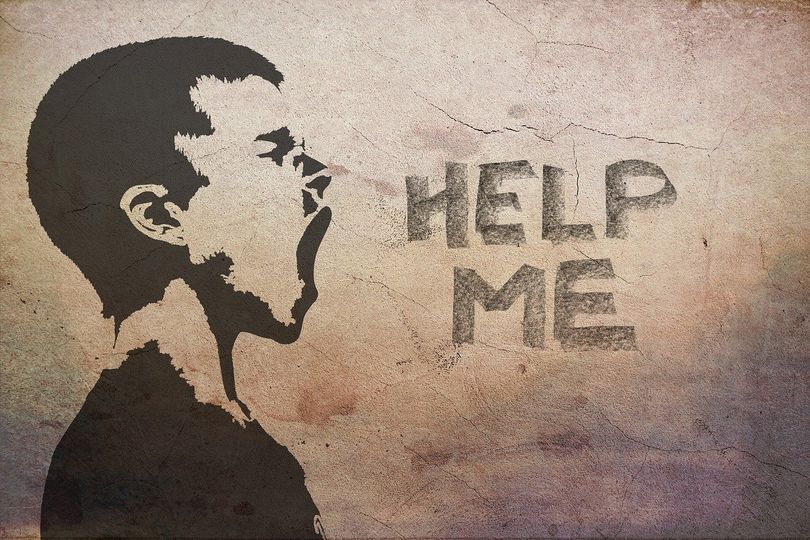
As Christians, we are often faced with the dilemma of whether or not to get involved when we see someone being mistreated. Our natural instinct might be to turn away, to avoid confrontation, or to stay in our comfort zones. But is that what we are called to do? The Bible provides numerous examples of people who risked their lives, reputations, and comfort to stand up for those who could not defend themselves. These stories serve as reminders of our Christian duty to advocate for justice, especially for those who have no voice.
When I was a teenager, there was a girl who rode the bus with me who was constantly harassed and bullied by other students because she liked black boys. In that time and place, dating across racial lines was controversial, and the cruelty she endured was relentless. At first, I did nothing. I felt bad for her but was afraid to get involved. However, as the abuse continued, I realized that standing by in silence made me complicit. Eventually, I chose to sit with her on the bus, defending her as best I could from her tormentors. Though we were not best friends, I believe my decision to intervene made a difference.
Little did I know that my own experiences would soon follow a similar path. My aunt, a white woman, gave birth to a biracial child. Suddenly, the shunning and ridicule I had witnessed on the bus became personal. Looking back, I realize that God was preparing me to face my own challenges by teaching me to stand up for others. But why do so many good people stand by and allow bad things to happen without getting involved? And more importantly, what does the Bible say about this?
Many of us are afraid of stepping into the line of fire when we see someone being mistreated. We worry about the consequences for ourselves—losing friends, being ridiculed, or even becoming a target of abuse. In today’s world, people often pull out their phones to record bad behavior rather than stepping in to stop it. This inaction is not a new phenomenon. In the Bible, we find examples of both those who stood up and those who stayed silent.
But should we, as Christians, stay silent?
Proverbs 31:8-9 (NIV) tells us:
“Speak up for those who cannot speak for themselves, for the rights of all who are destitute. Speak up and judge fairly; defend the rights of the poor and needy.”
This verse clearly calls us to advocate for the voiceless. Silence in the face of injustice is not an option for a follower of Christ.
One of the most compelling stories of someone standing up for the helpless is found in the story of Esther. Esther was a Jewish woman who became queen of Persia. When a decree was issued to annihilate the Jews, Esther’s cousin Mordecai urged her to go before the king and plead for their lives. Esther was initially afraid, knowing that approaching the king without an invitation could result in her death. But Mordecai’s words changed her perspective:
Esther 4:14 (NIV)
“For if you remain silent at this time, relief and deliverance for the Jews will arise from another place, but you and your father’s family will perish. And who knows but that you have come to your royal position for such a time as this?”
Esther risked her life to save her people, and her bravery led to the deliverance of the Jews. This story reminds us that God places us in situations where we are called to act, even when the risk is great. Esther could have chosen to stay silent, to protect herself, but she didn’t. Her courage changed the course of history.
Another powerful example is found in the story of the Good Samaritan. In Luke 10:25-37, Jesus tells the parable of a man who was beaten and left for dead on the side of the road. A priest and a Levite, both religious men, passed by the injured man without helping him. It was a Samaritan, a person from a group despised by Jews, who stopped to help the man. He bandaged his wounds, took him to an inn, and paid for his care.
Luke 10:33-34 (NIV)
“But a Samaritan, as he traveled, came where the man was; and when he saw him, he took pity on him. He went to him and bandaged his wounds, pouring on oil and wine. Then he put the man on his own donkey, brought him to an inn and took care of him.”
This parable teaches us that love and compassion should move us to action, regardless of the personal cost. The priest and the Levite may have been afraid or too busy, but the Samaritan saw a person in need and acted.
The Bible also shows us the consequences of staying silent or choosing the wrong path. One example is Judas Iscariot. Judas was one of Jesus’ twelve disciples. He walked with Jesus, listened to His teachings, and witnessed His miracles. Yet, despite being so close to the truth, Judas chose to betray Jesus for thirty pieces of silver.
Matthew 26:14-16 (NIV)
“Then one of the Twelve—the one called Judas Iscariot—went to the chief priests and asked, ‘What are you willing to give me if I deliver him over to you?’ So they counted out for him thirty pieces of silver. From then on Judas watched for an opportunity to hand him over.”
Judas’ betrayal of Jesus led to his own destruction. Matthew 27:5 tells us that Judas, overcome with guilt, hanged himself. His silence and betrayal cost him everything.
Similarly, Pontius Pilate, the Roman governor who presided over Jesus’ trial, knew that Jesus was innocent. Yet, he chose to appease the crowd rather than stand up for what was right. Matthew 27:24 (NIV) records Pilate’s cowardice:
“When Pilate saw that he was getting nowhere, but that instead an uproar was starting, he took water and washed his hands in front of the crowd. ‘I am innocent of this man’s blood,’ he said. ‘It is your responsibility!’”
Pilate’s attempt to absolve himself of responsibility did not make him innocent. His failure to act resulted in the crucifixion of the Son of God.
So how do we know when to act and when to stay silent? The Bible gives us clear guidance:
1. Pray for Wisdom: James 1:5 (NIV) promises us, “If any of you lacks wisdom, you should ask God, who gives generously to all without finding fault, and it will be given to you.” We must pray for discernment in situations where we feel unsure. God will guide us when we seek His wisdom.
2. Trust in God’s Strength: Fear can paralyze us, but we must remember that God gives us the strength to do what is right.
Isaiah 41:10 (NIV) says, “So do not fear, for I am with you; do not be dismayed, for I am your God. I will strengthen you and help you; I will uphold you with my righteous right hand.”
3. Act in Love: When we act, we must do so in love.
1 Corinthians 16:14 (NIV) tells us, “Do everything in love.” Our motivation should always be to reflect the love and justice of Christ.
In a world where people are often more willing to record injustice than to intervene, Christians are called to be different. We are called to stand up for those who cannot speak for themselves, to defend the voiceless, and to act in love. There is a cost to getting involved, but there is a greater cost to staying silent. Just as Esther, the Good Samaritan, and countless others in the Bible stepped in to defend the defenseless, we too must be willing to take action when God calls us to. Let us pray for the courage to stand up for what is right, even when it is difficult, and to trust that God will guide us in every situation.
 JoAnne's Spiritual Insights and Business Breakthroughs
Leave a comment