
Scripture: 1 Corinthians 3:6-7 (NIV)
“I planted the seed, Apollos watered it, but God has been making it grow. So neither the one who plants nor the one who waters is anything, but only God, who makes things grow.”
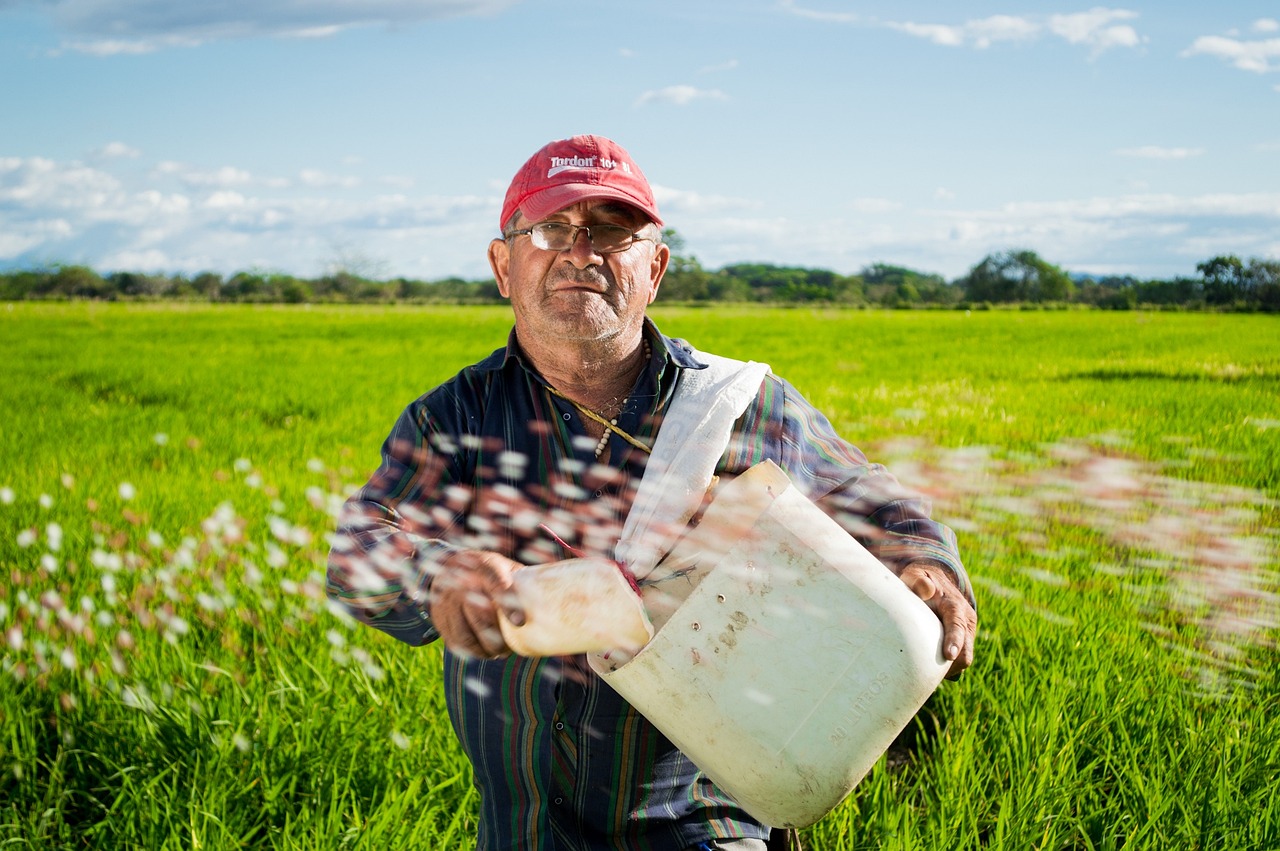
Have you ever heard of Broadcast Seeding? Broadcast seeding is a common planting method used in gardening and agriculture to sow seeds over a wide area. It involves scattering or “broadcasting” the seeds by hand or using a spreader, without placing them in individual rows or holes. This technique is often employed for large areas or when planting seeds that do not require precise spacing.
Here’s how broadcast seeding is typically done:
1. Prepare the Soil: Before broadcasting the seeds, it’s essential to prepare the soil properly. Clear any weeds or debris, loosen the soil, and amend it with organic matter or fertilizers if needed. Rake the soil to create a smooth and even surface.
2. Select the Seeds: Choose the appropriate seeds for the type of plants you want to grow. Ensure they are compatible with your growing conditions, climate, and soil type.
3. Determine the Seed Rate: The seed rate is the amount of seed needed per unit area. Follow the recommendations on the seed packet or consult gardening references to determine the right amount of seeds for the area you are planting.
4. Broadcasting the Seeds: There are a few methods for broadcasting seeds:
a. Hand Broadcasting: Simply scatter the seeds evenly over the soil by hand. This method is suitable for small garden patches or areas with irregular shapes.
b. Mechanical Spreader: For larger areas, use a mechanical spreader or seed broadcaster. These handheld or push-behind devices allow for more even distribution and save time and effort.
5. Rake and Cover: After broadcasting the seeds, lightly rake the soil to help cover the seeds slightly. This ensures good seed-to-soil contact and protects the seeds from being eaten by birds or washed away by heavy rain.
6. Watering: Water the area gently after seeding to help the seeds settle into the soil and initiate germination. Be careful not to wash the seeds away with excessive watering.
7. Monitor Growth: Keep an eye on the area and water as needed to support germination and early growth. Once the plants are established, thin them out if they are too crowded to allow for healthier growth.
Broadcast seeding is an efficient way to cover large areas quickly, but it may result in some seed wastage due to uneven distribution. It is best suited for plants that can thrive in densely populated conditions or will eventually be thinned out as they grow. However, for some plants that require specific spacing, such as certain vegetables, precision planting methods like row planting or using seedling trays may be more appropriate.
Overall, broadcast seeding is a practical and time-saving technique that can be useful for establishing a variety of plants in a garden or agricultural setting.
So, what does broadcast seeding have to do with Christianity? I believe we should use those same processes with evangelism. As Christians, we are called to share the gospel of Jesus Christ with others, making disciples of all nations (Matthew 28:19-20). However, this responsibility goes beyond just a casual desire to spread the good news; it requires intentional commitment and accountability. Just as farmers diligently cultivate their fields and measure their harvest, we too must approach our evangelism efforts with responsibility and a clear plan.
1. Commit to Share the Gospel:
The first step in our accountability process is a wholehearted commitment to share the gospel. We should be deeply convicted of our responsibility to proclaim the message of salvation to a lost world. This commitment arises from our love for God and our desire to see others come to know Him.
Scripture: Romans 1:16 (NIV)
“For I am not ashamed of the gospel, because it is the power of God that brings salvation to everyone who believes.”
2. Develop a Plan with Set Results:
To avoid haphazard efforts, we must develop a clear and actionable plan with specific goals in mind. Our plan may involve reaching a certain number of people, engaging in regular conversations about faith, inviting people to a church service or participating in evangelistic events. The important aspect is that we have measurable outcomes that guide our efforts.
3. Break the Action Plan Down to Daily Things to Do:
To ensure our commitment is reflected in our daily lives, we must break down our action plan into achievable daily steps. This could involve setting aside time for prayer, studying the Word, actively seeking opportunities to share the gospel, or supporting others in their evangelistic efforts.
4. Review Your Plan and Results at the End of Each Day:
At the end of each day, take time to review your efforts and assess how well you followed your plan. Reflect on the interactions you had, the conversations you engaged in, and the seeds you sowed. Celebrate successes and acknowledge areas for improvement and adjust the next days evangelism plan based on the days results.
5. Check for the Results on Day 7:
After a week, evaluate the overall impact of your efforts. This evaluation should not solely focus on numerical results but also on the fruitfulness of your interactions and the Spirit’s leading throughout the process.
6. Repeat if Successful or Set More Aggressive Goals:
If your efforts yielded positive results and meaningful engagement, celebrate the work of God and continue with the same plan, or set more ambitious goals to further extend your impact.
7. Redo Action Plan and Implement If Goals Were Not Met:
If you find that your goals were not met, do not be discouraged. Instead, prayerfully evaluate your approach, make necessary adjustments, and create a renewed action plan for the upcoming week.
The prophets of the Old Testament provide us with relevant examples of persistence in sharing God’s message. Take, for instance, the prophet Jeremiah. He faced continuous opposition and rejection from his people, yet he remained faithful in delivering God’s word, regardless of the outcome. Similarly, the prophet Jonah initially resisted his call to preach to Nineveh, but God’s relentless grace ultimately softened the hearts of the people.
These small prophets exemplify that the responsibility to share God’s message is not dependent on the response of the people. Our duty is to faithfully sow the seeds, leaving the growth and results in God’s hands (1 Corinthians 3:6-7).
As Christians, we are accountable for sharing the gospel. To do so effectively, we must commit to the task, develop a plan with set results, break it down into daily actions, review our progress daily, and evaluate our impact weekly. Be encouraged by the examples of the small prophets who persisted in proclaiming God’s message, trusting that God’s Word will never return void (Isaiah 55:11). Let’s employee the techniques of broadcast seeding to broadcast seeds of evangelism with an action plan, allowing God to be in control of who and how many take the next step in their spiritual journey. May the Holy Spirit empower us to be faithful witnesses, regardless of the outcome, knowing that God is the one who brings forth the harvest.
 JoAnne's Spiritual Insights and Business Breakthroughs
Leave a comment